Can a Small Business Afford to Automate? Can They Afford Not To?
Can a Small Business Afford to Automate? Can They Afford Not To?
For small businesses, AI automation has never been a more attractive proposition. The options available today make it worth revisiting assumptions formed ten years ago, five years ago, or even last year.
But affordability is only part of the story. AI automation can also help a business capture inquiries, engage prospective customers, and turn interest into bookings or sales.
That changes the question. Alongside “What does it cost?” business owners should ask, “What opportunities could it help us capture?”
Engage customers while they’re interested
When someone visits your website or calls your business, they may be ready to take the next step. They want to know whether you offer a particular service, when you’re available, what it might cost, or how to book.
If getting an answer takes too long, they may move on.
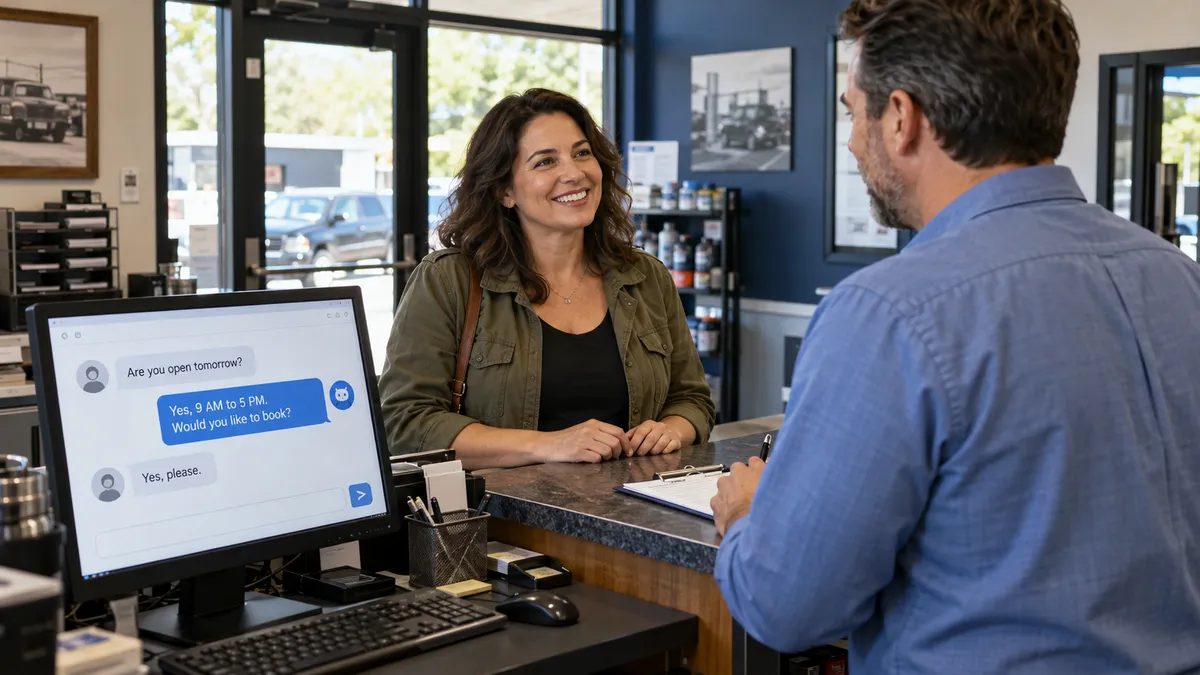
A website chatbot can engage visitors at that moment of interest. With accurate business information and the right setup, it can answer common questions, explain services, collect contact details, and guide someone toward a booking or a follow-up conversation.
An automated phone assistant can serve a similar purpose for callers. It can provide information, capture an inquiry, and route requests that need personal attention.
These interactions create opportunities to win business that might otherwise slip away.
Serve prospective customers without interrupting current ones
Small business owners know the tension: the phone rings while you’re helping a customer, working on a job, or delivering a service.
The caller has a reasonable question. What are your hours? Do you serve this area? Is there availability next week? What does the service usually cost?
Answering matters, but repeated interruptions have a cost. They pull your attention away from the customer or task in front of you.
An automated system can handle many of these routine inquiries using information you have approved. It can explain opening hours, describe services, provide pricing guidance where appropriate, and collect the details needed for a useful follow-up. When someone needs personal assistance, it can connect them immediately to an available team member.
Questions involving unusual requests, firm quotes, or decisions outside the system’s authority can go to a person. Meanwhile, routine questions receive a prompt response without repeatedly interrupting normal service.
Affordability includes the business you can gain
Time savings are useful, but they don’t tell the whole story.
Suppose a prospective customer visits your website after closing time. They have a question about a service and want to arrange an appointment. An automated assistant that answers the question and helps them take the next step may turn that visit into a booking.
Or consider a caller who reaches your business during a busy period. Instead of an unanswered call, they receive helpful information and leave a clear request for follow-up.
Neither interaction guarantees a sale. But both give your business a better opportunity to convert existing interest into revenue.
When judging affordability, consider three potential benefits:
More captured inquiries: fewer interested visitors and callers leave without connecting.
More bookings or sales: customers receive help taking the next step.
Fewer interruptions: staff can stay focused on delivering service.
The financial value depends on your inquiry volume, conversion rate, and profit from each additional sale. For some businesses, a small number of additional customers could cover the ongoing cost.
Getting started can be more accessible than you expect
AI automation does not always require a custom system or a large technology project. Many tools offer free or lower-cost entry options, allowing small businesses to explore what works before making a bigger commitment. Source: U.S. Small Business Administration.
The full cost still matters. Setup, connections to booking systems, usage charges, and keeping business information accurate should all be included.
But the practical starting point can be modest: a website assistant that answers your most common questions and captures inquiries, or a phone assistant that handles routine calls when your team is busy.
Choose the channel where you see the clearest missed opportunities, then measure the results.
Measure customer engagement as well as time saved
A useful trial should show whether the system helps customers and supports the business.
Track how many inquiries it handles, how many useful contacts it captures, and how many lead to completed bookings or sales. Check whether answers are accurate and whether customers can reach a person when needed.
Also ask your team whether interruptions have decreased. A system that brings in inquiries while helping staff stay focused can create value on both sides of the customer relationship.
A timely opportunity for small businesses
If you last considered automation several years
