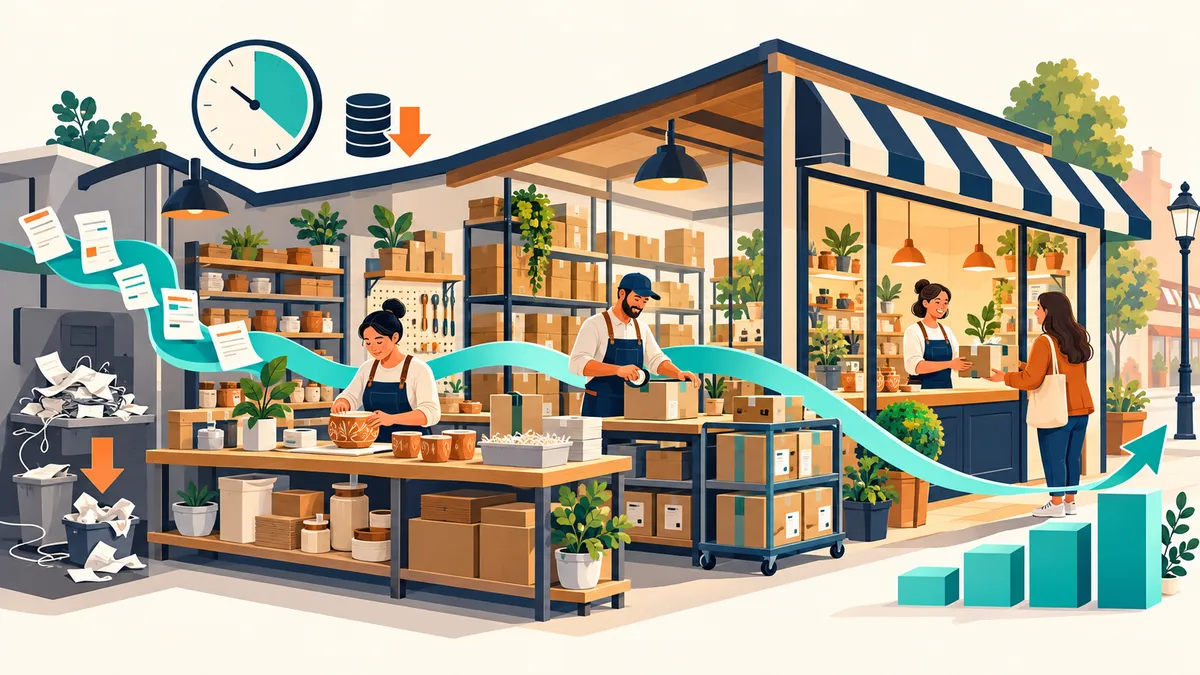
Automation Is Changing the Way Businesses Operate
Everyone Expects AI to Change Business. Southside Virginia Isn't Rushing to Find Out.
By Mark, Sight Sense AI
A recent survey of service companies found that 66% expect AI to bring moderate or major change to their business. Three out of four expect it to improve efficiency, and nearly half expect it to cut costs. [Survey name, publisher, year]
But only 34% are actively experimenting with it.
That gap between expecting something and actually trying it is the story. I see it every week talking with small business owners in Southside Virginia.
What's holding people back
The survey points to a handful of reasons, and they match what I hear on the ground:
Worry about complexity. People picture a long, technical integration with their existing systems.
Worry about training. They assume it means a lot of extra time teaching themselves or their staff.
Unclear return. They can't see what it would earn or save, so it feels like a gamble.
Employee resistance. About 18% of respondents cited it, and people worry that new technology threatens jobs or means more to learn.
Around Danville and the surrounding counties, I'd add one more: many owners aren't just hesitating to adopt it. They aren't even willing to look into it. They believe it's coming, and they still keep it at arm's length.
The cities are moving faster
In larger metro areas like Richmond, Washington, D.C., and Raleigh, North Carolina, the picture looks different. From what I'm seeing, businesses there are adopting AI at a much higher rate and show far less reluctance. They're willing to push through the learning curve to get the improvements they expect.
That's where the pressure on rural businesses comes from. As I see it, smaller rural companies are being overtaken by competitors who started sooner, and the longer a business waits, the harder that gap is to close.
Why that hesitation makes sense
I don't think it's stubbornness. Most small business owners I know built their companies on hard work and relationships. They've seen plenty of technology promises come and go, and they've been burned by tools that cost money and never got used.
So when someone says "AI," what they hear is expensive, complicated, and not made for a business like theirs.
The part nobody tells you
This isn't a gadget or a chatbot. It's an automated system that works your leads and your customer list while you're busy running the business. For a small company, that comes down to three things:
Bringing in new customers. A system that generates leads and follows up on every inquiry, so a call or web form never goes cold.
Keeping the customers who already paid you. Regular, automatic contact so they keep thinking of you, and a competitor doesn't get the chance to take them.
Selling more to people who already know you. Suggesting other services they may need and sending the right offer to the right customer at the right time.
Larger companies have had customer databases and contact systems like this for years. What's changed is that a small business can now build one too, without a big in-house team.
That also answers the return question. You can count the new leads, the customers who came back, and the added sales, then decide whether it's worth keeping.
The risk of waiting
If most owners in your area are waiting, the ones who try something small first get a head start. It doesn't require a big budget or technical skill. It requires being willing to look.
If you're curious but unsure where to start, I'm happy to talk it through for 15 minutes. No pitch and no pressure. If it's not a fit for your business, I'll tell you.
Mark, Sight Sense AI, serving small businesses in Southside Virginia and the North Carolina border area.
