AI Business Automation Is Becoming Part of How We Do Busines
AI Business Automation Is Becoming Part of How We Do Business
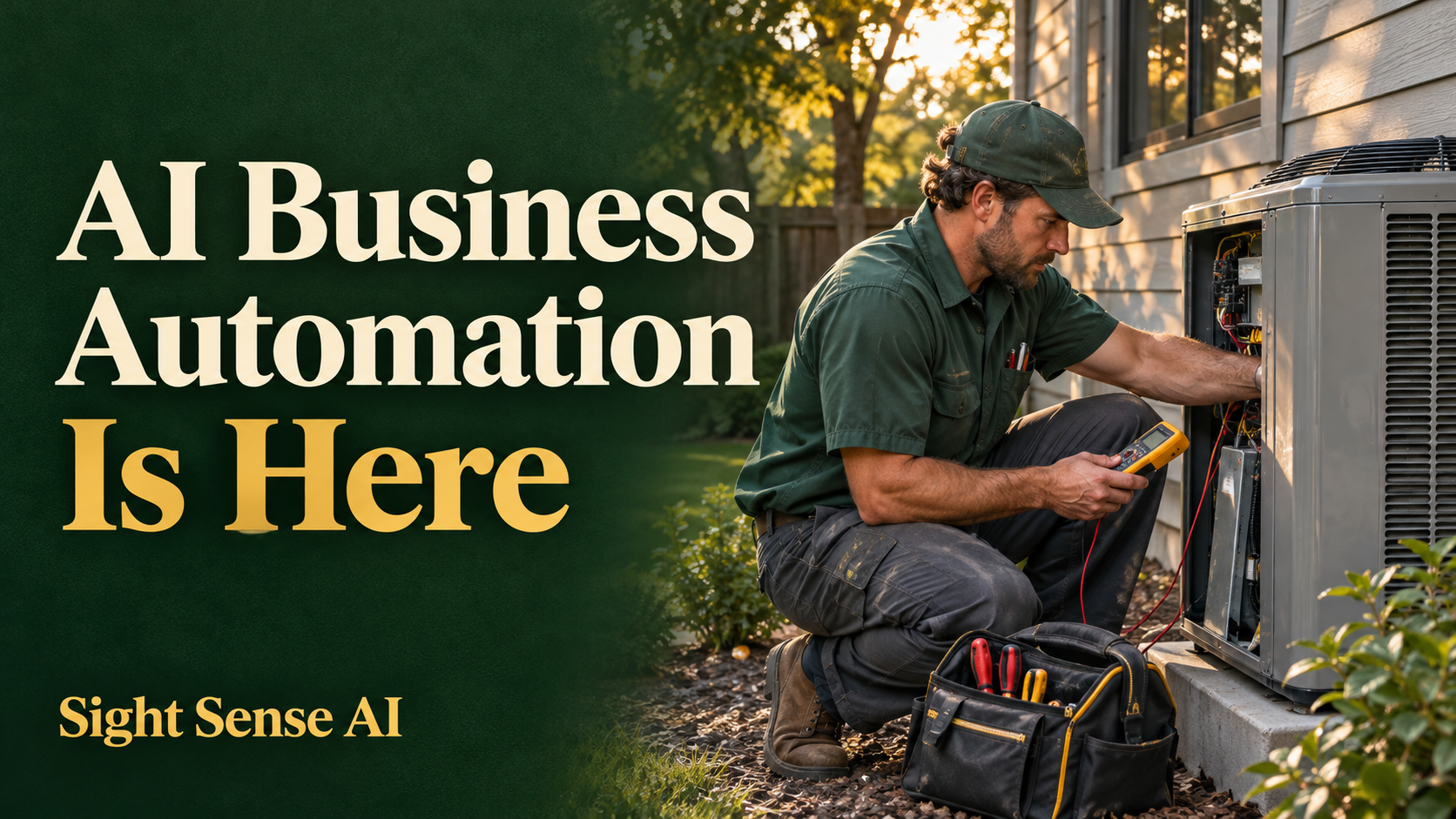
An HVAC owner can spend the afternoon helping a customer get their heat back and still lose the next job because nobody answered the phone. That’s the kind of problem AI business automation is getting better at solving. It gives a small team a way to take care of the customer in front of them while getting the next customer started.
What has changed?
Businesses have automated routine tasks for years. A form submission can trigger a confirmation email, and a calendar can send an appointment reminder. Those systems work well when the next step is predictable.
AI expands what those systems can handle. A customer can say, “The heat went out upstairs, and I won’t be home until after five.” A voice receptionist can capture both the service issue and the customer’s availability, ask for the service address, and pass the details to the office. The business still sets the rules for what the system can book, what it can promise, and when a person needs to step in.
That matters because the work that slips through the cracks rarely happens on a schedule. It’s the caller who reaches out after closing, the estimate that needs a follow-up on a hectic Friday, or the longtime customer who’s due for maintenance but hasn’t heard from you in a year. Each is a chance to earn business from someone who already knows your name or has already reached out.
How common is it?
In the U.S. Census Bureau’s survey covering December 2025 through May 2026, 17% to 20% of U.S. businesses reported using AI. By early May, 37% of businesses with at least 250 employees reported using it, compared with fewer than 20% of firms with four or fewer employees. The survey measures AI use broadly, so it covers activities like drafting emails as well as automating parts of a business process. census.gov
Even among businesses using AI, most are applying it selectively. A Census working paper found that 57% of AI-using firms applied it in three or fewer business functions. For an owner deciding where to begin, that makes a narrow first project a reasonable choice. www2.census.gov
Start where customers feel the difference
If estimates go unanswered, set up a follow-up that gives customers an easy way to ask a question or schedule the work. Have the reminder stop when the customer replies, and make sure the reply goes to the person who can help. Then track how many estimates get a response and how many turn into booked jobs.
For another business, the better starting point might be after-hours calls or getting past customers back on the maintenance schedule. Choose the place where work gets lost or customers are left waiting. That’s where your team can see whether a new system is earning its keep.
At Sight Sense AI, we design customer response and follow-up systems around how your business already works. If you know where customers tend to get left waiting, let’s talk about what it would take to fix it. Sight Sense AI
